Restorative Dental Care
Restorative Dentistry in Boulder: Getting Your Teeth Back to Work
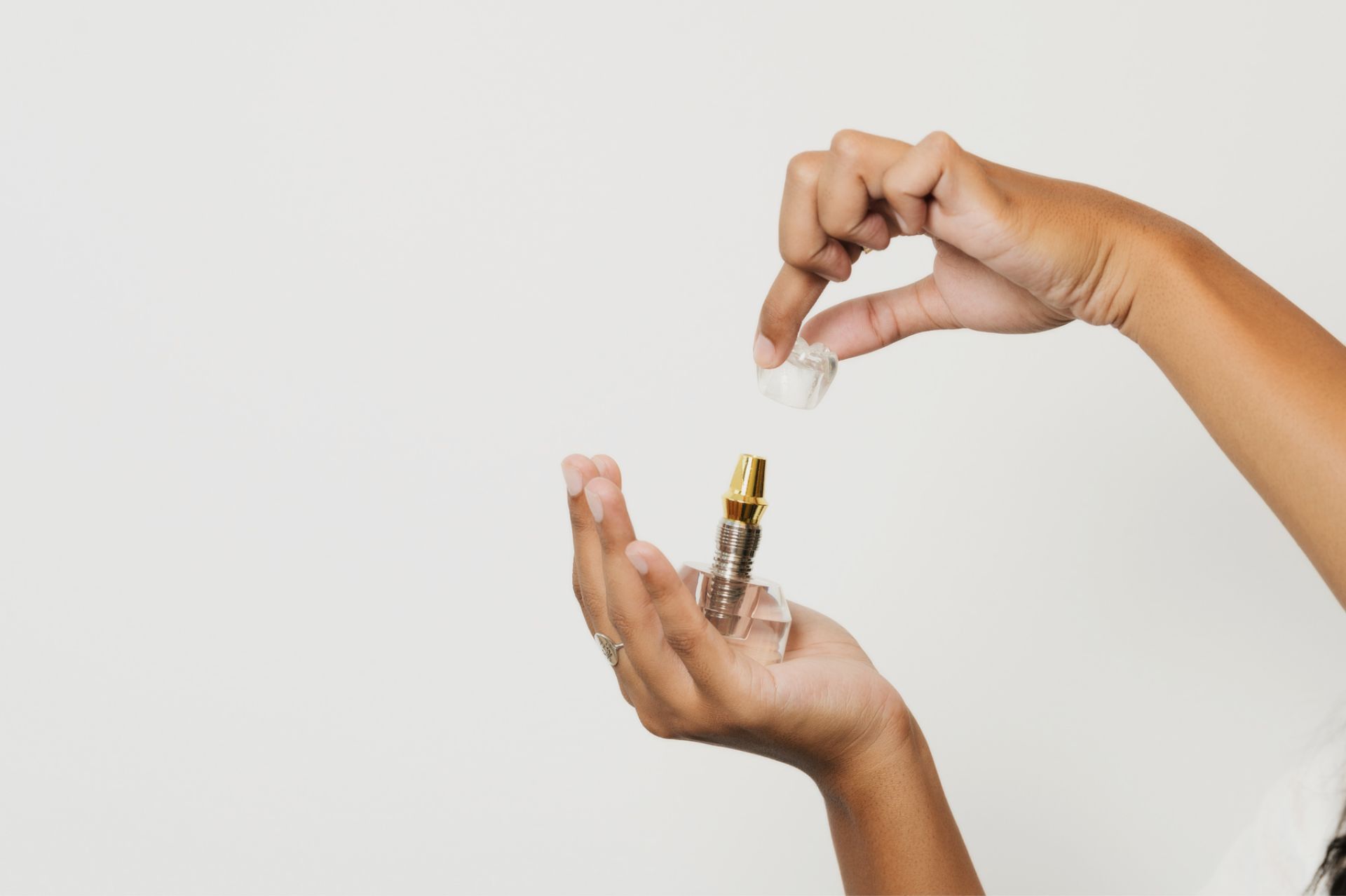
Restorative dentistry repairs teeth: a cracked molar, an old filling that finally gave out, a tooth that's missing altogether. Dr. Ryan Koenig and the team at Table Mesa Dental bring back the two things a damaged tooth stops doing well, chewing comfortably and looking like it belongs in your smile. That might mean a same-day crown, a dental implant to replace a tooth you've lost, or dentures when several teeth need replacing at once. Because we mill and 3D-print restorations right here in our South Broadway office, much of that work happens in a single visit instead of stretching across weeks with a temporary crown you have to babysit.
If you've been putting off a tooth you know needs attention, that's a normal place to start. Call us at (303) 590-3992 and we'll take a look, explain what we see in plain language, and let you decide what happens next.
Quick Takeaways
- Many restorations finish in one appointment. CEREC milling and in-house 3D printing make same-day crowns, inlays, and onlays routine here, not a special request.
- Ask what the tooth needs, not just what it costs. A filling, an onlay, a crown, and a root canal with a crown each protect a different amount of remaining tooth. We'll show you the images and explain which one your tooth calls for.
- Missing teeth have more than one answer. Single dental implants, implant-supported dentures, All-on-X (a full arch fixed onto four to six implants), bridges, and traditional dentures suit different mouths and budgets.
How Restorative Treatment Works, Step by Step

1. We look, and we show you what we see
Digital X-rays, intraoral photos, and cone beam scans when the situation calls for it. You'll see the same images we do on the screen, so you're never guessing about your own mouth.
2. We talk through the options and the trade-offs
Sometimes there's one clear answer. Often there are two or three reasonable paths with different costs, lifespans, and appointment counts. We lay them out, tell you what we'd recommend and why, and give you room to think.
3. We get you comfortable
Numbing done patiently and thoroughly, plus nitrous, oral sedation, or IV sedation if you want it. Longer restorative work is often easier to combine into one sedation appointment than to spread out.
4. We repair, rebuild, or replace
Depending on what's needed: removing decay and placing a filling, milling a crown or onlay while you wait, cleaning and sealing an infected canal, placing a dental implant, grafting bone or gum tissue, or removing a tooth that can't be saved.
5. We check the bite and follow up
A restoration that looks perfect but hits high when you chew isn't finished. We adjust, confirm you can bite and floss normally, and schedule follow-up when the treatment calls for it.
What Restorative Care Actually Does for You
A damaged tooth doesn't hold still. Decay and infection keep moving through it, so sealing the tooth now usually means keeping more of it later. The same goes for the space a tooth leaves behind: when one is lost, the neighboring teeth drift toward the gap and your bite shifts out of position. Rebuilding the tooth holds that arrangement in place. Below the gumline, extraction and disease shrink the bony ridge that used to hold the root. Bone grafting rebuilds that volume, which supports your facial structure and gives a dental implant something solid to anchor into.
The day-to-day payoff is simpler:
- You can chew without thinking about it, steering food to one side, or bracing for cold water.
- Porcelain and ceramic restorations are shade-matched to your own teeth, so the repair isn't the first thing anyone notices.
- Same-day crowns mean one appointment instead of two, with no weeks spent in a temporary.
Who Restorative Care Is Right For
If you have a cracked or worn tooth, an aching one, a filling that's failing, a gap where a tooth used to be, or gums receding away from the roots, restorative treatment is the category you're in. It also fits people rebuilding after years away from the dentist, and full-mouth cases are handled here rather than referred out.
A few situations call for a different order of operations. Active gum disease usually gets treated before we place a crown or an implant, because a restoration is only as stable as the tissue around it. Untreated grinding will wear down new work the way it wore down the old, so a nightguard may come first. And if bone volume is thin where an implant would go, grafting comes before the implant rather than instead of it. When an implant isn't the right fit, whether for health, healing, or budget reasons, a bridge or a partial denture can restore function well.
Timeline and What to Expect
- Consultation and imaging: one visit, usually under an hour, including the conversation about options.
- Fillings, inlays, onlays, same-day crowns: typically one appointment. Crowns and onlays are designed, milled, and seated while you're here.
- Root canal treatment: often one appointment, with the final crown the same day or shortly after.
- Extractions and wisdom teeth: one appointment, with soft-tissue healing over roughly one to two weeks. See what's involved with wisdom teeth removal.
- Dental implants: placement in one visit, then several months of healing while the implant fuses with bone. Some cases allow same-day dental implants with a 3D-printed temporary, so you don't leave with a gap.
- Bone or gum grafting: a short procedure, then a few months of healing before the next stage.
- Dentures: a series of appointments for impressions, fitting, and adjustments so the final result sits well. Learn more about your denture options.
Preparing Beforehand, Caring for the Result After
Before an appointment, eat normally unless we've asked you not to (sedation visits come with fasting instructions, and we'll give you those clearly). Tell us your full medication list, including blood thinners and supplements. If you're having sedation, arrange a ride home. And if the dental chair makes your pulse climb, say so when you book, so we can plan around it instead of discovering it mid-appointment.
Afterward, most of it is simple. Numbness wears off over a couple of hours, so go easy on chewing until it does. Mild soreness around a new crown or a grafted site is expected, and it fades. Brush and floss the restored tooth like any other; crowns don't get cavities, but the tooth underneath still can. Skip hard candy and ice with new restorations. If you grind, wear the nightguard. And if something feels high or sharp when you bite, call us. That's a five-minute adjustment, not something to live with.
Cost and Payment
Cost depends on which tooth, how much of it is left, whether infection or bone loss is involved, and what the restoration is made of. A single filling and a full-mouth rebuild sit at opposite ends of a wide range, so a number quoted before anyone has seen your X-rays wouldn't mean much. A same-day crown and a plan built around dental implants are different conversations.
After the exam, you get a written treatment plan with the fees laid out before you agree to anything. We accept many dental insurance plans and will help you understand your coverage, and we offer an in-house membership plan for patients without insurance. If treatment needs to be phased to fit your budget, we'll sequence it by what's most urgent. Attainable care is part of what we promise, and that only works if the money conversation is a real one. Get in touch and we'll schedule an exam so we can talk about actual numbers.
Why Patients Choose Table Mesa Dental for Restorative Work

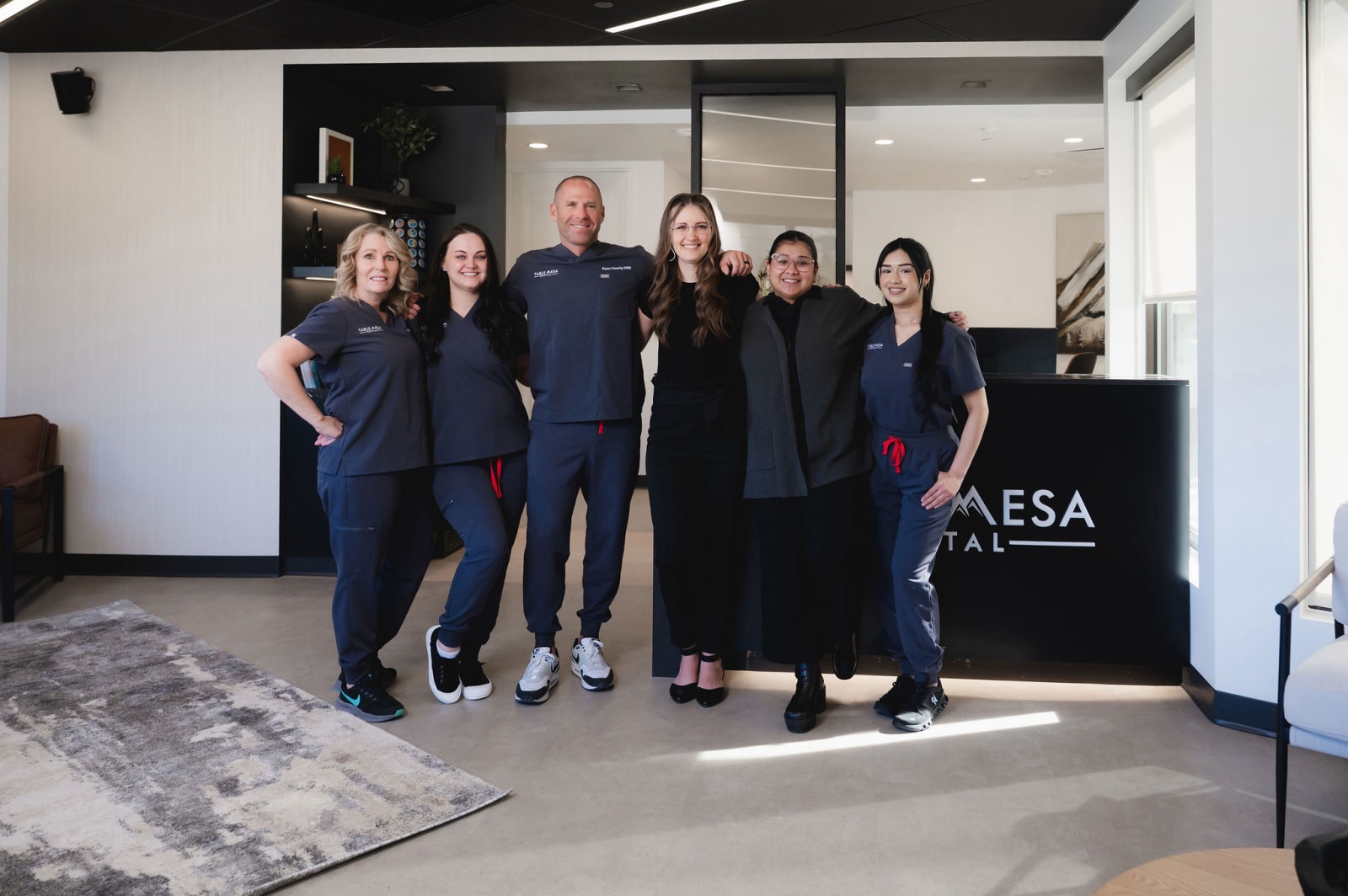
Dr. Ryan Koenig, DMD, brings more than two decades of practice, with advanced training in IV sedation, implants, oral surgery, and full-mouth reconstruction, plus over 1,000 hours of continuing education. Known to patients as Dr. K, he explains things clearly and doesn't oversell.
The rest of the difference is practical:
- Everything under one roof. Restorative, surgical, and sedation care happen in the same South Broadway office, so complex cases don't get handed off across town.
- Technology that saves you visits. CEREC milling for same-day crowns, in-house 3D printing, cone beam imaging, and digital X-rays make treatment faster, more precise, and easier on you.
- A team that leads with people. Our culture-first approach gives the emotional side of a dental appointment as much attention as the clinical side. Unrushed, welcoming, no lectures about the years you skipped.
- Rooted in south Boulder. We care for families across Boulder County and the greater Front Range, and we plan to be your dental home for the long haul, not just this one tooth. Reach out to our team when you're ready to talk through your options.
Frequently Asked Questions
Can a badly damaged tooth be saved, or does it have to come out?
Often it can be saved. If enough healthy structure remains and the root is sound, a crown or onlay can rebuild it; if infection has reached the pulp, root canal treatment plus a crown often keeps the tooth in service for years. We recommend extraction when the tooth is fractured below the gum, badly decayed, or losing bone support.
Are same-day crowns as strong as lab-made ones?
Yes. Same-day crowns are milled from solid blocks of ceramic or porcelain, the same durable materials used in outside labs. The difference is where and how fast the work happens, not the quality.
Will restorative work look obvious?
It shouldn't. Crowns, onlays, and inlays are shade-matched and contoured to match your surrounding teeth. On front teeth we take extra time with shade selection, because that's where the eye goes.
Does restorative treatment hurt?
The tooth is thoroughly numbed first, so most patients feel pressure and vibration rather than pain. And if anxiety is the reason you've delayed, the sedation options described above apply here too.
How long do restorations last?
With good hygiene and regular checkups, crowns, onlays, and implant restorations can last many years. Habits matter, too: grinding, chewing ice, skipping cleanings, and untreated gum disease shorten the life of any restoration.
I haven't been to a dentist in years. Where do I even start?
With one appointment, a full set of images, and an honest conversation. We'll build a plan in stages so nothing feels overwhelming, starting with whatever hurts or poses the biggest risk. No one here will judge the gap in your dental history. Just reach out to our Boulder office when you're ready.
Let's Get That Tooth Handled
A tooth that hurts, wobbles, or embarrasses you doesn't have to stay that way, and sorting out the fix is less stressful than wondering. Whether that ends up being a same-day crown, a dental implant, or something simpler, we'll walk you through the options before anything is scheduled. If nerves are part of the picture, ask us about sedation dentistry. Call Table Mesa Dental at (303) 590-3992 and we'll find a time that works. We're at 603 South Broadway in south Boulder, open Monday through Thursday from 8 to 4 and Friday until 2, and we'd be glad to get this squared away for you.
Share
Your Story