TMJ Disorder
TMJ Disorder Treatment in Boulder, CO
If your jaw clicks, aches, locks up, or leaves you with headaches by mid-afternoon, that's your temporomandibular joint asking for help. It's the hinge that connects your lower jaw to your skull, and when the joint and the muscles around it get overworked, chewing, talking, and even sleeping stop feeling normal. Dr. K and the team at Table Mesa Dental treat TMJ disorder by finding the source of the strain, then relieving it, usually without surgery and often with a custom appliance you wear at night. When years of clenching have already worn teeth down, that plan may also include restorative work like same-day crowns to rebuild the bite.
Jaw pain is one of the more common things people bring us after months of assuming it would go away on its own. It usually doesn't, but it does respond well to treatment. It often comes up during a routine general dentistry visit, and if dental appointments themselves make you tense, we offer sedation dentistry so treatment stays comfortable. Give us a call at (303) 590-3992 and we'll take a look.
Quick Takeaways
- Most TMJ cases start conservatively. Custom oral appliances, bite adjustments, jaw exercises, and habit changes come long before anyone talks about surgery.
- Come with a two-week symptom log if you can. What you've noticed about your own jaw shapes the diagnosis. See "Preparing for Your Visit" for what to jot down.
- Ask about imaging. Our cone beam 3D scanner shows the joint and surrounding bone in detail rather than guessing from a flat X-ray, and it's part of the general dentistry workup we use for jaw pain.
- Worn or chipped teeth are a clue. If you grind or clench, your teeth show it, and repairing that damage with a same-day crown is part of the treatment.
- Next step: a TMJ evaluation covering your jaw, your bite, and your habits, then your options in plain language. Reach out to our Boulder office to get on the schedule.
How TMJ Treatment Works
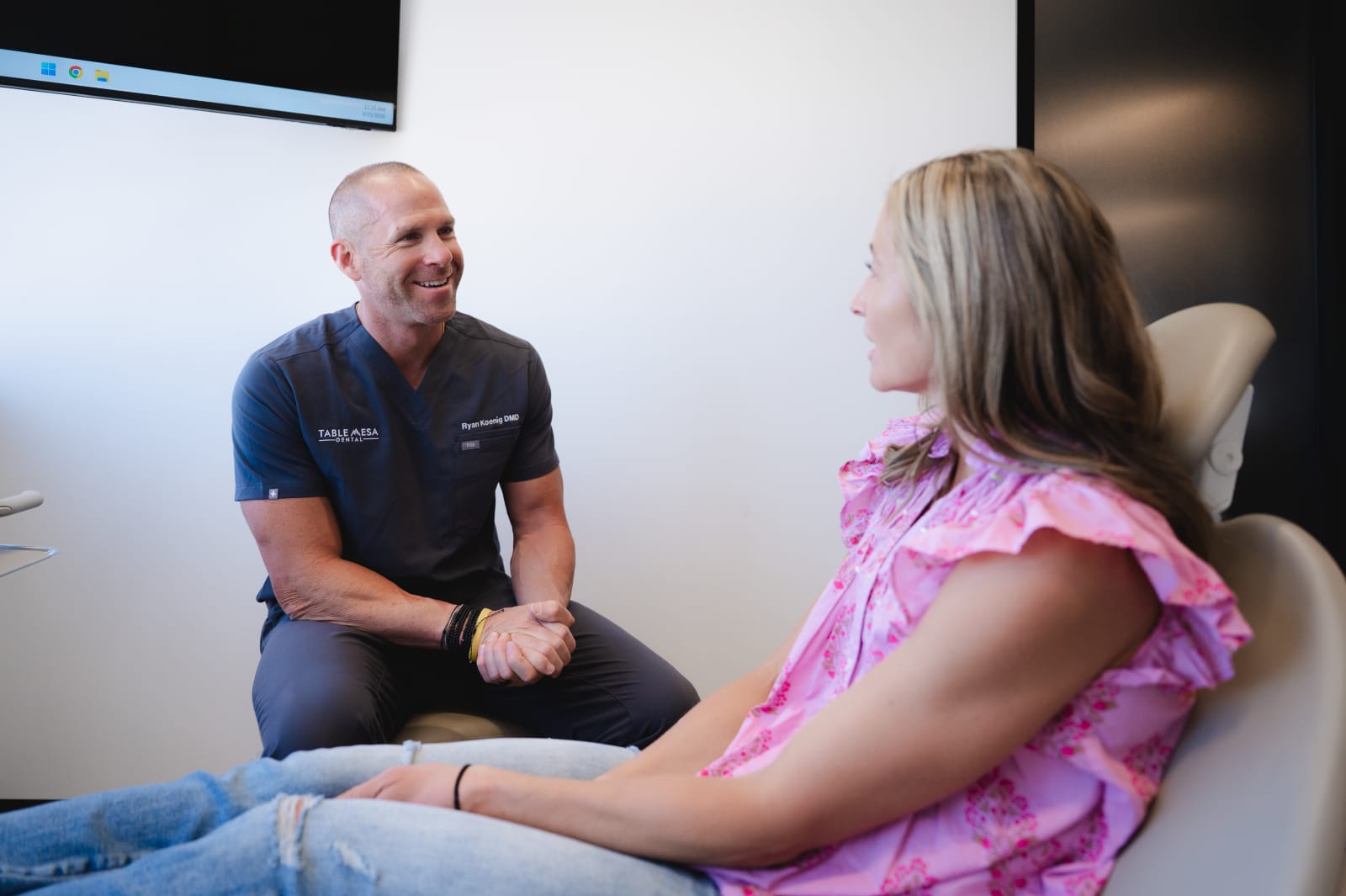
There's no single TMJ treatment, because there's no single cause. Our job is to figure out what's driving your specific discomfort before we treat it.
1. We listen to the whole story
When the pain shows up, what makes it worse, whether you've noticed grinding, how you're sleeping, whether there's been recent stress or an injury. Jaw pain rarely exists in isolation, and the details matter.
2. We examine the joint and your bite
We feel how the joint moves and where it catches, measure how far you can open comfortably, check the chewing muscles for tenderness, and look at how your upper and lower teeth meet. Wear patterns often confirm clenching you weren't aware of, and misaligned teeth behind an uneven bite can sometimes be addressed with Clear Aligners.
3. We image when we need a clearer view
Cone beam imaging gives us a three-dimensional look at the joint and the bone around it. It's quick, it happens right here, and it turns a hunch into information.
4. We build a plan around the cause
For most people that starts with a custom-fitted nightguard designed for your bite, which stops your teeth from grinding against each other and lets the muscles rest. Depending on what we find, the plan may also include jaw stretches, heat and soft-food guidance, adjusting a filling or crown that's sitting high, or restoring worn teeth with same-day crowns when the wear has changed how your bite closes.
5. We follow up and adjust
Appliances get fine-tuned. Symptoms shift. We check in, ask what's changed, and adapt rather than handing you a device and calling it done. If jaw pain is making it hard to sleep or eat, get in touch with our Boulder team.
What Treatment Actually Improves
- Less daily pain. Jaw soreness, temple tension, and clenching headaches typically ease once the muscles get a break.
- Easier movement. Opening wide for a sandwich or a yawn without catching, popping, or worrying it'll lock.
- Protection for your teeth and dental work. Grinding wears enamel flat, cracks cusps, and shortens the life of crowns and fillings. An appliance absorbs that force instead, which is far simpler than rebuilding a fractured tooth later with a same-day crown.
- Better sleep for you and whoever's next to you. Nighttime clenching and grinding disrupt rest in ways people often don't connect to their jaw.
- Fewer emergency appointments. Steady treatment, alongside routine general dentistry visits, keeps a broken tooth or a locked jaw from upending your plans.
- A clear explanation. Understanding what's happening in your jaw, and why, lifts a surprising amount of worry. To talk it through, reach out to our Boulder office.
Who Benefits Most from TMJ Care
You're likely a good candidate for a TMJ evaluation if you recognize a few of these:
- Jaw pain, soreness, or fatigue, especially in the morning
- Clicking, popping, or grinding sounds when you open and close
- Frequent tension headaches or aching around the temples and ears
- A jaw that catches, shifts, or briefly locks
- Teeth that look flattened, chipped, or newly sensitive
- A partner who's mentioned hearing you grind at night
Some jaw pain isn't coming from the joint at all. Sinus pressure, ear infections, nerve conditions, certain kinds of arthritis, and even a cracked tooth can mimic TMJ symptoms. Sorting out which one you're dealing with is a big part of what the evaluation is for, and if the answer turns out to be a tooth, we can treat it here with options like same-day crowns. If dental visits make you tense up, ask about sedation dentistry first. When you're ready for answers, reach out to our Boulder team.
Timeline and What to Expect
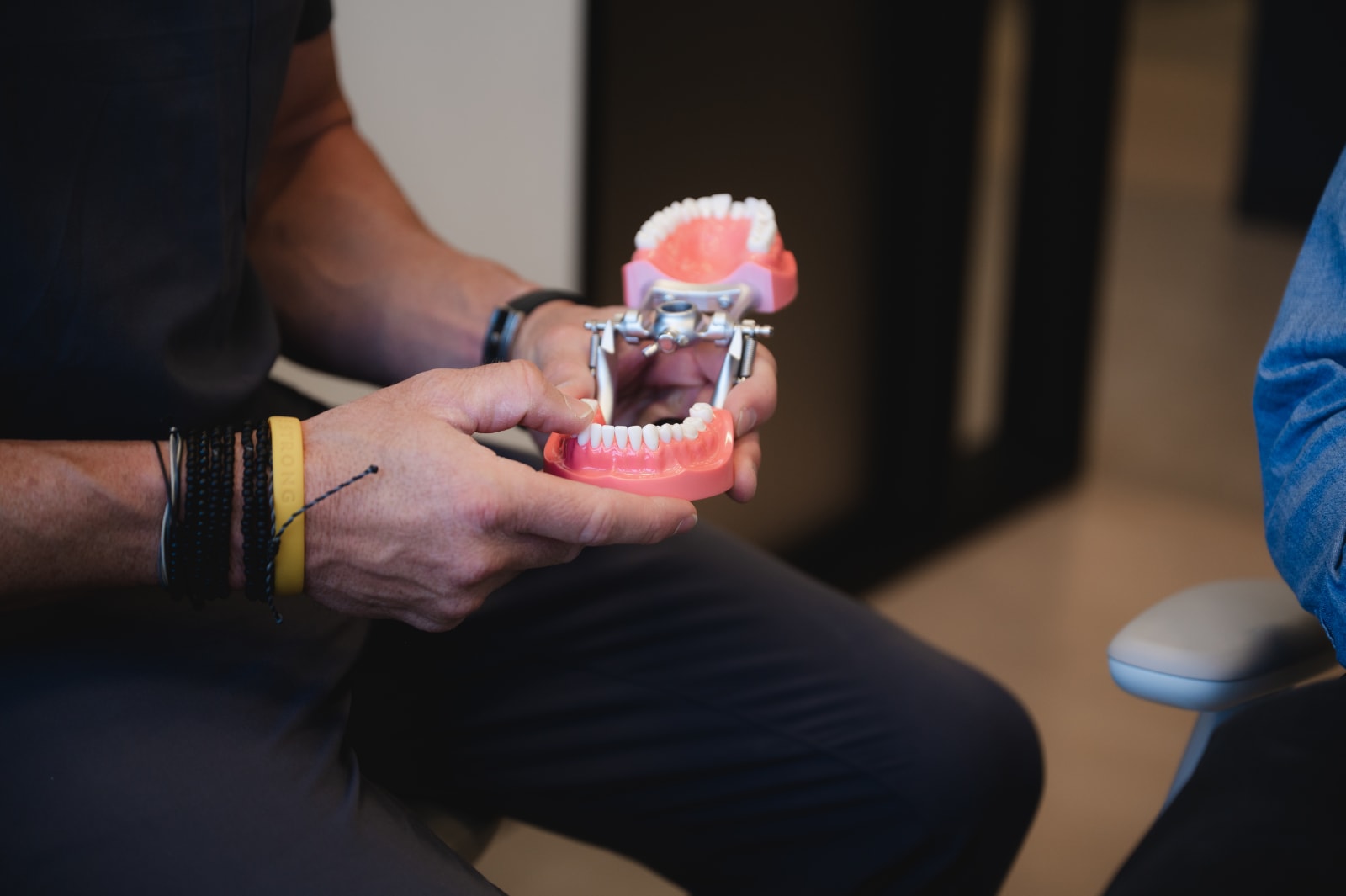
Your first visit runs like a focused consultation: history, exam, imaging if it's useful, and a conversation about findings and options. Most people leave understanding what's going on, at the same unhurried pace as any of our general dentistry appointments.
If a custom appliance is the plan, we take a digital scan of your teeth, so no goopy impression trays. Fitting and delivery happen at a follow-up visit, where we adjust it until it sits comfortably and your bite feels even. If dental visits make you tense, ask about sedation options beforehand.
Relief timing varies. Muscle-driven pain often improves within a few weeks of consistent appliance wear and habit changes. Longer-standing joint issues can take a few months, with periodic check-ins. If your bite needs restorative work, such as a same-day crown, we sequence that separately so nothing feels rushed.
Preparing for Your Visit and Caring for Results
Before you come in
- Track your symptoms for a week or two if you can: timing, side, triggers, intensity.
- Note any recent dental work, orthodontic treatment, injuries, or new medications.
- Bring questions. If nerves are part of the picture, ask about sedation options when you schedule your visit.
Living with your treatment
- Wear your appliance as prescribed. Skipping nights is the most common reason progress stalls.
- Clean it daily with a brush and cool water, and store it dry in its case.
- Give overworked muscles easier days: softer foods during flare-ups, moist heat, smaller bites, and no gum chewing.
- Watch for daytime clenching. Lips together, teeth apart is the resting position you want.
- Bring the appliance to your regular cleanings and checkups so we can check the fit and look for new wear.
Cost and Payment
TMJ treatment costs depend on what your case needs: an exam and imaging, a custom appliance, bite adjustments, or restorative work if worn teeth are part of the problem. Since those combinations vary so much, we don't post a single price. After your evaluation, you'll get a written treatment plan with the actual numbers before anything is scheduled.
We accept many dental insurance plans, and coverage for appliances and TMJ-related care differs quite a bit between them. Our team will help you understand what your plan includes, and we'll walk through payment options and our in-house membership plan. If you're already due for a checkup, we can look at your jaw during your next general dentistry visit. Just reach out to our Boulder office to get on the schedule.
Why Patients Choose Table Mesa Dental for Jaw Pain
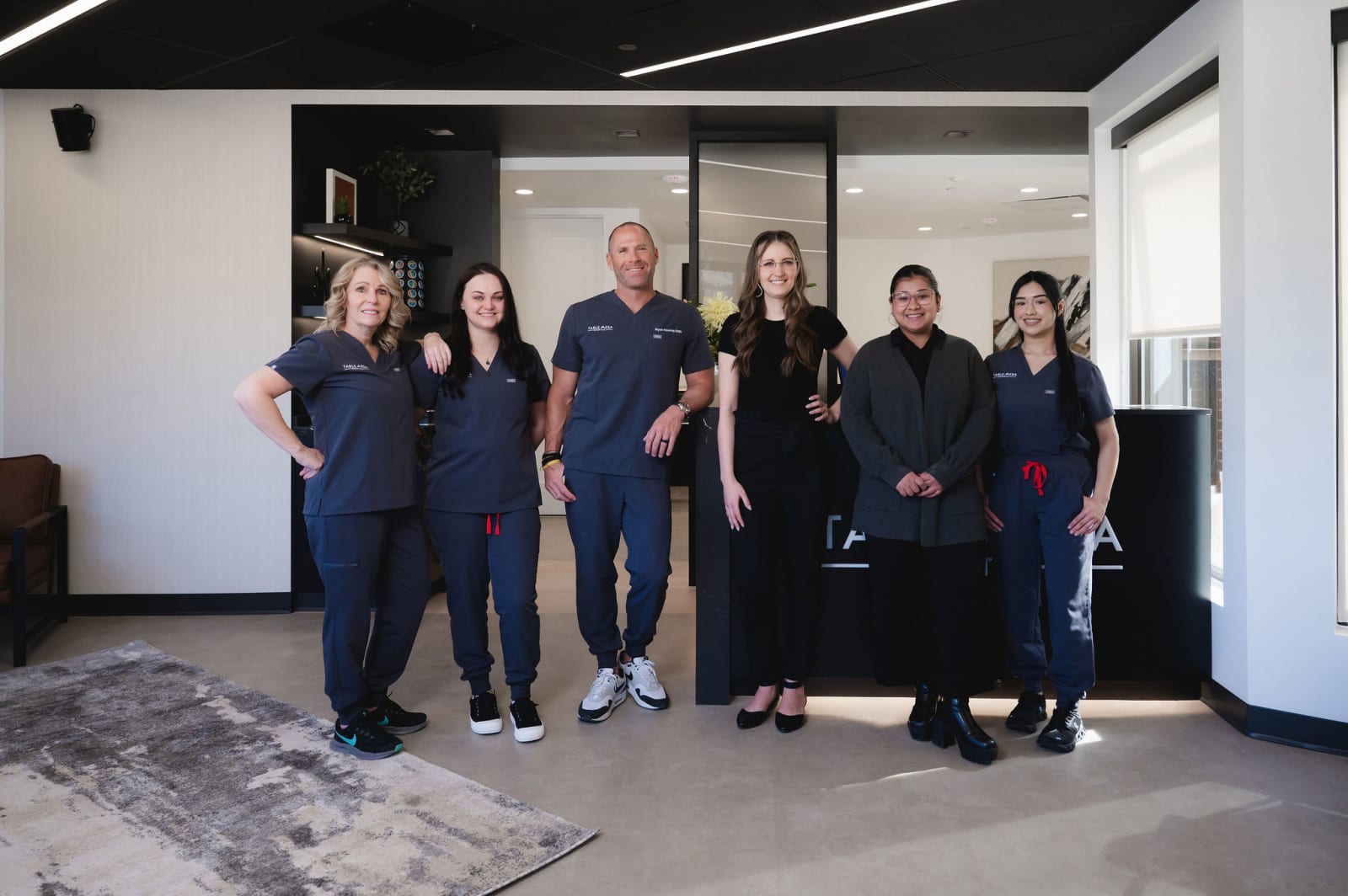
Dr. K brings more than two decades of dentistry to this, with advanced training in implants, oral surgery, and full-mouth reconstruction. That reconstruction background matters for TMJ: understanding how a bite fits together as a whole system is exactly what jaw problems require.
Cone beam 3D imaging, digital scanning, in-office milling, and 3D printing mean diagnosis and appliance fabrication happen under one roof, with less waiting. If your treatment involves restorative work, same-day crowns keep the visits down.
And the culture is the part patients mention first. We lead with empathy, we don't rush, and we explain things in words that make sense. If dental visits make you anxious, sedation options including nitrous oxide, oral sedation, and IV sedation are available.
Frequently Asked Questions
Will my TMJ disorder go away on its own?
Mild symptoms from a stressful stretch or minor strain sometimes settle down. But if your jaw pain has lasted more than a few weeks, keeps coming back, or comes with headaches or limited opening, have it evaluated rather than waiting it out. Ongoing clenching quietly damages teeth in the meantime.
Is a store-bought nightguard good enough?
A boil-and-bite guard may offer some cushioning, but it isn't matched to your bite, and a poorly fitting appliance can shift your jaw into a worse position or fall out during sleep. A custom appliance is made from a digital scan of your teeth and adjusted until your bite closes evenly on it.
Does TMJ treatment hurt?
The evaluation itself is just an exam and imaging, no needles or drills. A new appliance feels bulky for the first few nights and then becomes background noise. If bite adjustments or restorative work are part of the plan, we'll numb you comfortably and sedation is available.
Can stress really cause jaw pain?
It's one of the most common contributors we see. Stress shows up in the jaw as clenching, often during sleep when you have no idea it's happening. That's why treatment usually combines protecting the teeth with reducing the clenching itself.
Do I need a specialist instead of a dentist?
Most TMJ disorder is managed well in a general dental practice, especially one comfortable with bite and full-mouth work. If your case involves significant joint degeneration or a condition outside dentistry's scope, we'll tell you plainly and help you get to the right specialist.
What if my bite feels off after dental work?
Let us know. A crown or filling sitting slightly high can throw off how your teeth meet and set off muscle strain quickly. Adjustments are usually fast and make a real difference.
Let's Get Your Jaw Feeling Normal Again
Living with a sore, clicking, tired jaw becomes weirdly normal after a while. It doesn't have to be. We'll take the time to understand what's happening and give you a plan that fits your life. If nerves about dental visits are part of the picture, we can talk through sedation options so appointments stay calm and comfortable.
Call Table Mesa Dental at (303) 590-3992 or request an appointment online to set up a TMJ evaluation with Dr. K.
Share
Your Story